Tuesday, November 03, 2020
Remy: Better Now? (Post Malone Parody)
I posted a link to this video over a year ago but it's so good it deserves its own post.
Labels: communism, economics, humor, politics, Remy, video


Wednesday, November 06, 2019
The Bavarian Soviet Republic
 |
| Roughly
translated the text on the image above says: "100 Years" and "Fight with the Comintern for the rebuilding of the Bavarian Soviet! Long live the 100th anniversary of the Bavarian Soviet Republic April 13, 1919 - April 13, 2019". The sign identifies the marchers as members of the Neuhausen—a borough of Munich—section of the Communist Party of Germany (KPD). |
Unfortunately, Fitch's constructive criticism of American unions was not generally well-received. It was mostly ignored.
However, the impetus for this post was not Solidarity for Sale but, rather, a bit in a fascinating 2006 book review by Fitch of separate works by Michael Lerner and Jim Wallis. I won't comment on those books or Fitch's review except to say I am on the same side of the fence as Fitch (but for somewhat different reasons) and he was out of his hermeneutical depth.
What I want to focus on here is his striking reference to the 1919 Bavarian Soviet Republic. In "Vetting God's Politics" Fitch writes:
Lerner's account of the Nazi rise to power leaves out some critical material and political factors — like the Great Depression and the suicidal division of the Left between Social Democrats and Communists. But even more significantly, Lerner blots out the not inconsiderable role of the communitarian Jewish Left in producing the convulsive reaction that Hitler exploited.In speaking this not-so-speakable (see note below) history Fitch exhibits the kind of intellectual integrity that helped unfairly doom him to a relative obscurity in academic and activist circles. There's a reason why Lerner's account left this information out and it is directly related to why Lerner's star rose much higher than Fitch's in elite circles.
At a certain point in the upheaval that followed the German defeat by the Allies, members of [Martin] Buber's Neue Gemeinschaft group — like Gustav Landauer and Erich Mühsam — were high-level participants in the regime which seized power in Bavaria. To understand the terrible repercussion of the 1919 anarchist coup, imagine if Vietnam not only won the war but invaded the U.S. in the 60s and, in the chaos that followed, a handful of long-bearded Jewish radicals from Berkeley seized power in California and declared the state a Republic. Then, although a tiny anarchist minority of a left revolutionary minority, the government proceeded to decree a new social order; handing out a worthless currency as free money; establishing agrarian communes; and declaring war on Mexico. (Bavaria declared war on Switzerland after its refusal to lend the new government 60 locomotives.) It's likely that California would have experienced a reaction far worse than the election of Ronald Reagan.
That said, Fitch's characterization of the Bavarian Soviet Republic (BSR) as an "anarchist coup" is a bit puzzling. Apparently, some of the leading figures in the BSR, such as Landauer and Mühsam were self-described anarchists. However, the seizure of state power in a coup is inimical to anarchism as I understand it.
Moreover, in The Fatal Embrace: Jews and the State (UChicago Pr., 1993) Benjamin Ginsberg more aptly writes:
Jews were also among the leaders of the Communist government that the KPD briefly established in Bavaria after the murder of Kurt Eisner. Eugene Levine was head of the short-lived Bavarian Soviet Republic, Gustav Landauer was its commissar for propaganda and cultural affairs, and Ernst Toller commanded its "red army."Kurt Eisner and Ernst Toller were members of the Independent Social Democratic Party of Germany (USPD). Founded in 1917, the USPD joined the Communist International in 1920, leading to a split with the majority of party members going into the KPD. (The USPD is not to be confused with the Majority Social Democratic Party of Germany (MSPD) but often referred to simply as the Social Democratic Party of Germany (SPD). The USPD was the result of a split within the SPD/MSPD, a self-proclaimed Marxist party. Many founders of the Spartacist League-KPD, such as the Jewish revolutionary Rosa Luxemburg, also started out in the SPD.)
This is a complicated period in Bavarian history. As best I can tell, the sequence of events is as follows:
November 8, 1918: Eisner (a USPD communist) proclaims the People's State of Bavaria (Volksstaat Bayern; VSB) in Munich. Johannes Hoffmann, a Social Democrat (MSPD) and not a Jew, becomes the VSB's minister of education or culture (sources vary). Some sources say Landauer and Mühsam had formal positions in Eisner's government, most say their positions were supportive but informal.
November 21: 29-year-old Adolph Hitler arrives at an army garrison in Munich after being discharged from the hospital where he was recovering from war injuries. The following month he is transferred to Traunstein (about 100 km/62 mi from Munich) only to return to Munich in January or February (In Mein Kampf Hitler says it was March).
January 5, 1919: A general strike, led by the Spartacist League (renamed as/absorbed into the KPD in the preceding month) and the Independent Socialists, begins in Berlin. It will last about one week and in the ensuing violence 150 - 200 people will die before it is violently suppressed by Freikorps.
January 12: In parliamentary elections Eisner's party, the USPD, gets only 2.5% of the vote, entitling them to 3 seats. By contrast, the MSPD wins 31 seats.
February 21: Eisner is assassinated by a 22-year-old army officer, Count Arco-Valley (described as "a young Jew" by British historian Nicholas Goodrick-Clarke in his book, The Occult Roots of Nazism). Some sources claim Hitler is photographed in uniform at Eisner's funeral five days later. The VSB falls into disarray and Toller soon takes over Eisner's position as leader of the Bavarian branch of the USPD.
March 17: Hoffmann is elected by the VSB's parliament as the VSB's new minister-president.
April 3: Hitler is elected liaison of his demobilization battalion to the Hoffmann government.
April 6-7: A coup is undertaken following which the establishment of the Bavarian Soviet Republic (Räterepublik Baiern; RRB) is proclaimed under the leadership of Toller, along with Landauer and Mühsam as cabinet ministers. Hoffmann and others flee Munich to Bamberg. It was during this period that the RRB, under Toller, declared war on Switzerland. Hitler stays put.
April 13: Hoffmann's forces attempt to forcibly re-establish control in Munich but fail. That same day a Jewish KPD member, Eugen Leviné stages a coup against Toller and seizes power. According to Richard J. Evans in The Coming of the Third Reich, the Russian-born Leviné is acting on his own, not the KPD's, initiative. He takes directions from V. I. Lenin (also of Jewish ancestry) to, among other things, arrest large numbers of so-called class enemies, seize privately owned weapons under penalty of death, and organize a 20,000 strong "Red Army" to "spearhead the Bolshevization of Europe". The ousted Toller, an avowed pacifist, takes a position in the new regime as commander of the Red Army. Landauer is also prepared to stay in the new regime but when his cultural program is rejected he quits.
April 15: Hitler is elected liaison of his demobilization battalion to the Leviné government. Leviné's repressive policies and inept leadership along with outside pressure quickly bring about chaos in Munich.
May 1: The siege of Munich is broken by an alliance between Hoffmann's forces and Freikorps under Lt. General Burghard von Oven. Shortly afterwards, Hitler comes out in open opposition to the recently deposed revolutionary government(s) and in what he will describe in Mein Kampf as his "first more or less purely political activity" Hitler joins a commission "investigating the behaviour of his regiment's soldiers during the two soviet republics."
Note
As another example of the not-so-speakable consider that on the popular, if generally unreliable, web site Wikipedia there is a category of articles on "Christian communists" (not to mention "Christian communism") and a category of "African-American communists". There are also 151 categories of "Communists by nationality". There's a category of "Jewish socialists" but you will not find a category of articles on Jewish communists. That category was repeatedly created and deleted in the span of about two weeks in 2007.
Thus, for instance, Karl Marx is not categorized in Wikipedia as a "Jewish communist". Bear in mind that the Communist Manifesto's primary author had maternal and paternal grandfathers who were rabbis and his mother converted from Judaism to Christianity years after Karl's birth. FWIW, Marx is also not categorized with "Christian communists", "German Christians", or "German Lutherans" (although his father is).
To the extent that Jews constitute an ethnicity or nationality, Karl Marx was Jewish. Although he was baptized as a child (so was the execrable Abe Foxman), Marx was nevertheless Jewish under Judaic religious law, i.e. halakha. As one Orthodox rabbi notes: "... in Jewish law there is no true notion of converting out of the faith. Once a person is born Jewish, that is his lifelong status, whether he is observant or not ... past baptism and conversion never [change] that."
There is also no apparent evidence that Marx ever participated in the Lutheran rite of confirmation or that he ever professed faith in Christ as a child or an adult. Marx did profess atheism but that is not necessarily a halakhic disqualifier.
Now consider the case of Benedict Spinoza. Amsterdam's rabbis formally branded Spinoza a heretic and expelled him from the community in 1656. In 2012, the chief rabbi of Amsterdam's Sephardic Jews was asked to rescind the writ of cherem; he refused. Yet, Spinoza's biographical article is included in the following Wikipedia categories: 17th-century Jewish theologians, 17th-century Sephardi Jews, Dutch Jews, Jewish biblical scholars, Jewish philosophers, Jewish skeptics, Jewish translators of the Bible, and 17th-century Jewish biblical scholars.
The single, Wikipedia categorical reference to Marx's Jewishness is "German people of Dutch-Jewish descent". The point is not that Karl Marx was an observant, professing adherent of Judaism; he, apparently, was not. The point is that, unlike virtually every other group of communists, Jewish communists such as Eisner, Toller, Luxemburg, and Leviné are not allowed to be seen and considered in their collective in Wikipedia. Why is that?
Labels: Abraham Foxman, anarchism, communism, history, Jews, labor, Lenin, Lerner, Ronald Reagan, Wikipedia
Saturday, October 19, 2019
Some More Remy Vids Worth Watching
- Old Town Road (Lil Nas X & Billy Ray Cyrus Parody)
- Better Now? (Post Malone Parody)
- Democratic Debate (The Rap)
- All My Loving (Beatles Parody)
Labels: communism, Democrats, economics, humor, politics, Remy
Sunday, July 28, 2019
Heinlein & Haldeman
I finally got around to reading Starship Troopers (1959, 2006) by Robert A. Heinlein and The Forever War (1974, 2009) by Joe Haldeman this summer. Over the years I've heard and read a lot about the books.
I also watched Paul Verhoeven's film treatment of Starship Troopers (ST) not long after its 1997 theatrical debut. Regarding the film, I am in general agreement with Joseph Sale's take (which I've edited slightly below):
Paul Verhoeven's 1997 film, while a masterpiece in its own right, misses much of the nuance of the original novel. He makes Starship Troopers into a satire of fascist states, casting Aryan, white, blonde, beautiful people in the lead roles to further his point, and it works brilliantly, but the novel itself is not an advocate of fascism to begin with. Johnnie is not an Aryan, he is Filipino (Juan Rico is his real name), and the [Mobile Infantry] is made up of people from all over the world. In fact, Heinlein bizarrely presents us with one of the most utopian and unified visions of future human society I have ever read. The film also makes use of over-the-top violence to contrast with its propaganda-interludes, no doubt highlighting how the lies of the state juxtapose with the realities of war. This is intriguing, almost a reverse of the novel which flits between Johnnie’s excruciating mental and physical training, which make explicit the gravity of war on every level of understanding, and the action sequences, which it's undeniable Johnnie seems to enjoy. In the novel, the state is far more responsible than Johnnie is.It's interesting that at least one key didactic point that Heinlein wrote into ST was more or less faithfully preserved in Verhoeven's film. In the book, Major Reid, an Officer Candidate School instructor in History and Moral Philosophy asserts:
To vote is to wield authority; it is the supreme authority from which all other authority derives—such as mine to make your lives miserable once a day. Force, if you will!—the franchise is force, naked and raw, the Power of the Rods and the Ax. Whether it is exerted by ten men or by ten billion, political authority is force.1Why did Verhoeven leave this (without the reference to the fasces) in the film? I suspect it is because he believed it furthered his case concerning the alleged fascism of Heinlein and/or ST. In fact, it is a profound truth that force and violence underlie voting and political power. Yes, even in representative democracies.
Why is it acceptable to coerce people simply because 51% of the voting population agrees that people should be punished for doing or not doing x, y, or z? In nearly all cases, criminal laws are never even put to voters, they are enacted by politicians viewed unfavorably by large segments of the population.
The case that is made in ST is that the truth about voting logically leads to the following solution:
Since sovereign franchise is the ultimate in human authority, we insure that all who wield it accept the ultimate in social responsibility—we require each person who wishes to exert control over the state to wager his own life—and lose it, if need be—to save the life of the state. The maximum responsibility a human can accept is thus equated to the ultimate authority a human can exert. Yin and yang, perfect and equal.2Approached from a slightly different angle it seems to me quite reasonable to expect from those who would wield the coercive power of the state against others to demonstrate some tangible civic virtue, to have some literal skin in the game.
However, there is an unspoken corollary that I find even more appealing. That is, by reducing the coercive power of the state—if you're going to have a state at all—one can expand the franchise and lower the bar to participation. That is, a widespread franchise would be appropriate only where the state has little or no coercive power. Steps in this direction might be to abolish capital punishment and military conscription and then to progressively redistribute centralized authority downward.
(The most interesting take I've read of 'the voting problem' in ST is in Dan Thompson's account of a discussion he was involved in at a WorldCon in Baltimore. I've included a link to it below in the See also section.)
Recurrent accusations of Heinlein's alleged personal and literary fascism are well known. Despite the many problems I have with some of Heinlein's later political positions, I think the charge of fascism is an unfounded example of the scurrilous name-calling too common among political ideologues.
It's interesting that Haldeman and Heinlein were friends. Moreover, in 1999, Haldeman was asked "about the whole 'fascist' argument, that ST is a novel about fascism, etc.?" He responded: " 'Fascist' is too easy an epithet. My problem with ST is more complex than that." Haldeman also penned the introduction to the 2018 Folio Society edition of ST (I have not read it yet though I would like to).
It is almost a commonplace that ST is an inadvertently dystopian novel meant to present a (fascistic) utopian vision. By contrast, The Forever War (TFW) is often taken as "an anti-war classic" and a refutation of ST. However, Haldeman himself has said that although he did not pen a reply to it, he was influenced by Heinlein's book.
In any case, of the two books I find TFW to be markedly more dystopian than ST. If forced to choose between living in the sci-fi future world of ST or TFW I would unhesitatingly choose ST.
I do not subscribe to the view that every act or idea in a work of fiction is endorsed by the author. Yet, authors generally do not let acts and ideas to which they object go unchallenged. Moreover, Haldeman has stated the TFW is based on his own experiences in the Vietnam War and, as others have pointed out the main character's name (Mandella) is a near anagram of the author's surname. Haldeman earned a degree in physics before he was drafted as did Mandella.3 Mandella's lover and companion is Marygay Potter while Haldeman's wife's maiden name is Mary Gay Potter.
So, I think it's fair, in this case, to assume that TFW reflects, in no small part, the author's personal views at the time he wrote the book. And Haldeman leaves a number of objectionable things in TFW unchallenged. For instance, in Haldeman's fictional world women are integrated into the military by requiring them to be sexually "compliant and promiscuous by military custom (and law)".4
In TFW, several dubious ideas about war are also left unchallenged: War is good for the general economy, the war in TFW is mainly the fault of bellicose veterans, and once begun, "only continued because the two races were unable to communicate".5
In fact, economists have shown that wars and unnecessarily large peacetime military establishments are macroeconomically detrimental. Arguably, wars may sometimes be necessary but as the authors of Economic Consequences of War on the U.S. Economy concluded, "Regardless of the way a war is financed, the overall macroeconomic effect on the economy tends to be negative." Wars benefit those who supply the weapons, munitions, and other material used to wage war but everyone else loses, especially the human casualties which seldom, if ever, include war profiteers.
As for bellicose veterans starting wars, it is perhaps just as likely that veterans will oppose offensive wars. For instance, in the aftermath of WW I, the American Legion was founded in 1919 proclaiming that a "large standing army is uneconomic and un-American" and pursuing "National safety with freedom from militarism ..."
In its early years the Legion was a major actor on the international stage in a citizen-led peace movement. Among other things, it actively supported and endorsed the 1928 Kellogg-Briand Pact "condemn[ing] recourse to war for the solution of international controversies, and renounc[ing] it, as an instrument of national policy". Though largely ignored this treaty remains in force. While it has arguably drifted far away from it roots, the Legion, to this day, exists, in part, "to promote peace and good will on earth".
In any case, modern large scale wars are not initiated by a single individual or small group of people. One could argue that a veteran named Hitler started World War II but that war was set in motion by the outcome of World War I and Hitler could not have initiated it without the support of the German establishment and a large segment of the German population. Likewise, I am aware of no war in history that continued (or began) simply because of a miscommunication.
Sexual orientation in TFW is also problematic. Haldeman seems to see it as strongly dichotomous, culturally determined, and easily changed.6 In TFW, human sexual orientation collectively swings between extremes. Without going into further detail I am a bit troubled that Haldeman did not imagine a future where society was not so polarized in terms of sexuality.
Finally, Haldeman also tacitly endorse eugenics.7 His solution to ending war is to erase nearly all human diversity and individuality. At the end of TFW, most of "humanity" is comprised mainly of "clones of a single individual."8 In TFW, humanity's fate is to become something resembling the Bugs—with their "total communism"—in Heinlein's ST. 9
I'd like to hope that humanity will one day abandon war and I disagree with some of Heinlein's ideas. However, if the price of peace is a future like Haldeman imagines in TFW (and I don't think it is) then I would choose war in the ST-like world.
Notes:
1. ST, p. 193. Emphasis is in the original. All ST page references in this post are from the 2006 Ace trade paperback edition.
2. ST, p. 194. It is often asserted, mostly by those critical of Heinlein, that in the ST's Terran Federation the only way to earn the franchise is to serve in the military. Although Heinlein could have been clearer in ST on this subject there are several passages suggesting what is required is not necessarily military service (see pp. 32-33, 190-194). For an in-depth and fair discussion of this perennial controversy see "The Nature of "Federal Service" in Robert A. Heinlein's Starship Troopers" by James Gifford.
3. TFW, p. 7. All TFW page references in this post are from the 2009 Thomas Dunne Books paperback edition.
4. TFW, p. 45.
5. TFW, pp. 139, 261, 281.
6. TFW, pp. 118, 129, 189, 197, 260.
7. TFW, pp. 197, 260.
8. TFW, pp. 260-262.
9. TFW, p. 261; ST p. 194.
See also:
- "Who Deserves To Be A Citizen? A Reflection On Robert Heinlein's Starship Troopers" by Farzan Sabet
- "Starship Troopers and the Right to Vote" by Dan Thompson
- "Over the hump: Robert A. Heinlein's Starship Troopers" by Jo Walton
- "Blasting bugs is more complicated than you think" by Sam Jordison
- "Fascism and Starship Troopers, Once More" by hyperpat
- "Heinlein's Female Troubles" by M. G. Lord
Labels: anarchism, art and literature, communism, culture, eugenics, gender, Heinlein, human reproduction, LGBT, military, politics, quotations, voting, War
Monday, August 08, 2016
Bernie Sanders: Retrograde on Palestine

The Hashomer Hatzair was also "active in the Haganah, the underground army of the Jewish community in Palestine. Together with the other kibbutz federations, its members formed the nucleus of the Palmach, which served as the shock troops in the war for Israel's independence."
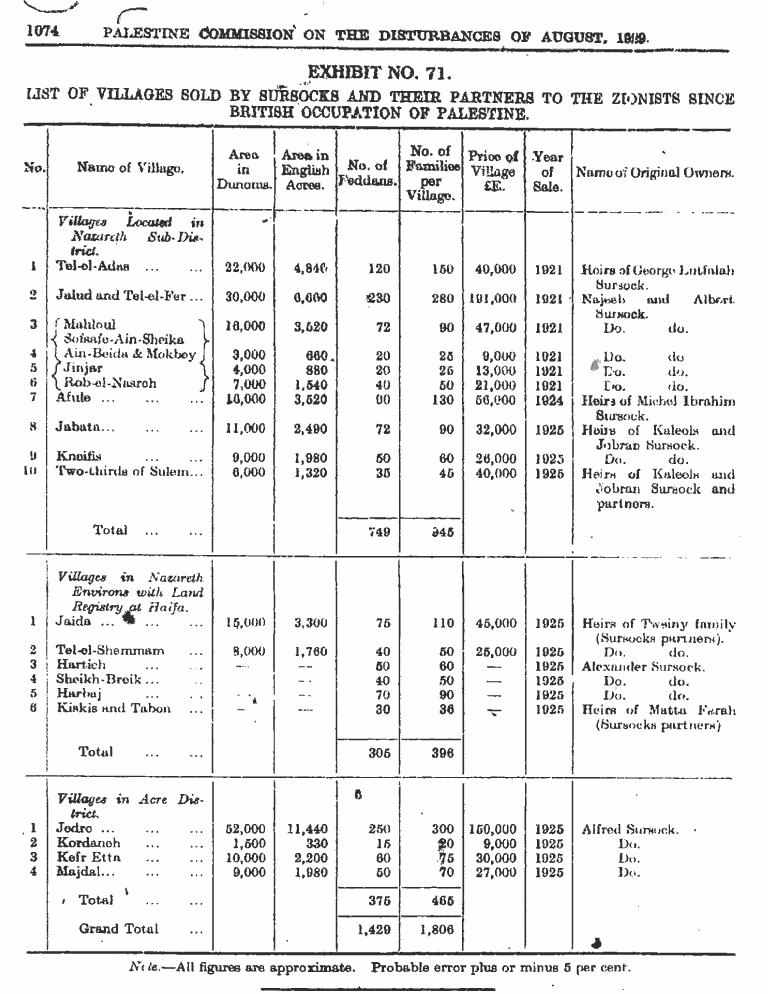
Sanders and his wife worked at the Jews-only Kibbutz Sha'ar Ha'amakim near Haifa. Kibbutz Sha'ar Ha'amakim was built on land inhabited by Palestinians for generations but Zionist Jews made a deal with the infamous Sursuk family, absentee landlords in Beirut, to sell the land out from under the fellaheen.
Sanders has also aligned himself with a rabid religious Zionist, the late Rabbi Menachem Mendel Schneerson, and his Chabad movement. According to Israel Shahak and Norton Mezvinsky, Baruch Goldstein, perpetrator of the 1994 Hebron massacre was also affiliated with Chabad (see page 61 and chap. 6 in Jewish Fundamentalism in Israel (2004)).
Chabad is also known for erecting giant menorahs on public property during Hanukkah and Sanders helped out with that, too. In County of Allegheny v. American Civil Liberties Union , the case Sanders helped advance, the US Supreme Court decided that a nativity scene had to go but a menorah was okay.
The foundations of Sanders' socialism (and Jewish identity) are troubling to say the least. If Sanders had publicly and fully repudiated his ties to Stalinism, the violent, Jewish supremacist Hashomer Hatzair/kibbutz movement, and Schneerson and Chabad or at least denounced their most problematic aspects then that would one thing. As far as I know Sanders has done nothing of the sort.
See also:
- "I won't vote for Bernie Sanders: His feeble position on Israel is a serious progressive problem" by Stephen Salaita on Salon
- "Bernie Sanders' record on Palestine US Politics" by Nicolas Sawaya on Mondoweiss
Labels: Chabad, communism, Israel, Palestine, politics, Zionism
Saturday, May 30, 2009
Quotable: Solzhenitsyn on the "Letter of the Law"
Not long ago I read Aleksandr Solzhenitsyn's June 1978 commencement address to Harvard University entitled A World Split Apart. Solzhenitsyn's obvious strength was his writing on life in Russia. And while he was also a keen observer of the West, he did not always see it so clearly. His understandable anti-Communism sometimes blinded him to the reality of American imperialism.
For instance, he chastised the "American intelligentsia" for the US defeat in Vietnam never understanding that the US role was indefensible by his own standards. Sounding the alarm, he claimed, "a hundredfold Vietnam now looms over [America]." He decried the materialism, irresponsible freedom, and humanism of the West and the US, in particular, never understanding that these were, in large part, symptoms not causes.
At least in 1978, he failed understand that Americans are not free but the unwitting slaves of a sophisticated and pervasive propaganda system. Which is, in turn, part of a larger system or constellation of systems which are life-destroying on scales large and small and manifest in America's culture of death and the "The Combine" of Ken Kesey's novel, One Flew Over the Cuckoo's Nest or the "Domination System" described by Walter Wink.
In any case, the passage below from A World Split Apart has much to commend itself in terms of understanding the law in America. It is noteworthy that his examples of the failure to exercise "Voluntary self-restraint" are not individuals as one would expect to hear from many American commentators but they are corporations.
Western society has chosen for itself the organization best suited to its purposes and one I might call legalistic. The limits of human rights and rightness are determined by a system of laws; such limits are very broad. People in the West have acquired considerable skill in using, interpreting, and manipulating law (though laws tend to be too complicated for an average person to understand without the help of an expert). Every conflict is solved according to the letter of the law and this is considered to be the ultimate solution. If one is right from a legal point of view, nothing more is required, nobody may mention that one could still not be right, and urge self-restraint or a renunciation of these rights, call for sacrifice and selfless risk: this would simply sound absurd. Voluntary self-restraint is almost unheard of: everybody strives toward further expansion to the extreme limit of the legal frames. (An oil company is legally blameless when it buys up an invention of a new type of energy in order to prevent its use. A food product manufacturer is legally blameless when he poisons his produce to make it last longer: after all, people are free not to purchase it.)Source: Aleksandr Solzhenitsyn. A World Split Apart. (New York: Harper & Row, 1978) pp. 15-19.
I have spent all my life under a Communist regime and I will tell you that a society without any objective legal scale is a terrible one indeed. But a society with no other scale but the legal one is also less than worthy of man. A society based on the letter of the law and never reaching any higher fails to take full advantage of the full range of human possibilities. The letter of the law is too cold and formal to have a beneficial influence on society. Whenever the tissue of life is woven of legalistic relationships, this creates an atmosphere of spiritual mediocrity that paralyzes man’s noblest impulses.
And it will be simply impossible to bear up to the trials of this threatening century with nothing but the supports of a legalistic structure.
Labels: art and literature, communism, critical thinking, Empire, Justice, Ken Kesey, law, quotations